Why battery storage is taking off in Bedford
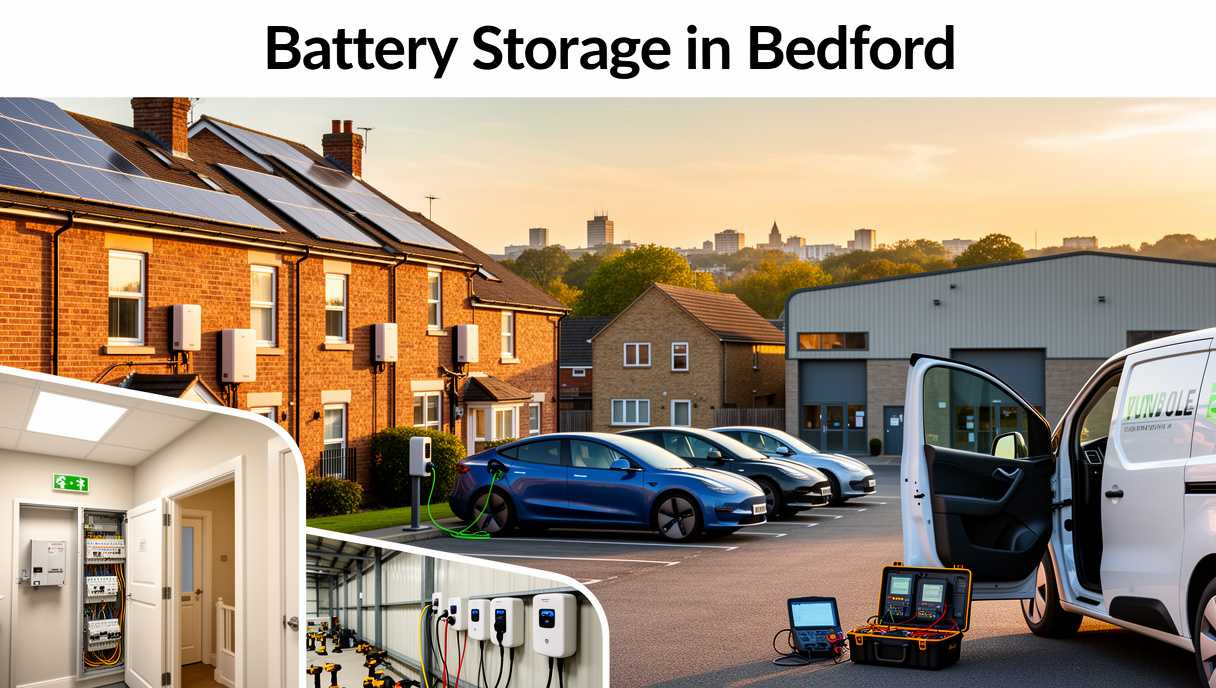
Across Bedford, Kempston, Bromham and the surrounding villages, households and businesses are turning to battery storage to take control of energy costs, unlock more value from solar PV, and build resilience. A modern battery system stores inexpensive or self-generated electricity for use later, reducing peak-time imports and shielding you from volatile tariffs. For solar owners in Bedford and nearby areas like Great Denham, Biddenham and Wixams, batteries capture daytime surplus that would otherwise be exported for pennies, then release it in the evening when usage and tariffs are higher.
Local factors make the case even stronger. Bedfordshire’s growing EV adoption means more homes are managing higher night-time loads; pairing an EV charger with home energy storage can flatten demand and cut costs. Time-of-use tariffs such as Economy 7 or dynamic smart tariffs encourage charging a battery off-peak and discharging during pricier windows. With the UK’s net-zero transition accelerating, batteries also complement efficient LED lighting, heat pumps and other electrified systems by balancing demand. The result is a smoother, cheaper, lower-carbon energy profile for both domestic and commercial users.
Resilience matters too. While the local grid is reliable, planned works and occasional interruptions can be disruptive for home workers, retailers and light industrial units around Bedford. Batteries configured for backup power can keep essential circuits running—such as lighting, broadband, refrigeration or tills—until the grid returns. Even without full backup, strategic support for critical loads provides valuable continuity for small businesses in areas like Ampthill, Flitwick and Sandy, where any downtime affects trade.
In addition, UK policy is increasingly supportive of renewable energy measures. Many homeowners and SMEs are discovering that a well-designed system paired with the right tariff can significantly reduce annual bills and carbon emissions, while providing real-time energy insights through smart apps. For Bedford-based organisations managing multi-site operations, scalable storage solutions offer predictable savings at each location and measurable performance improvements across the portfolio.
How to choose and size the right system for your property
Getting the most from battery storage in Bedford starts with a tailored design. The two key numbers are usable capacity (kWh) and power rating (kW). Capacity dictates how much energy you can store, while power governs how quickly you can charge or discharge. A typical Bedford home might opt for 5–12 kWh to cover evening peaks and overnight consumption, whereas a small workshop could need 15–30 kWh to manage machinery loads or refrigeration. The best fit depends on your load profile, solar array size (if any), and tariff structure.
Consider chemistry and warranty as well. Lithium iron phosphate (LFP) is popular for its stability, long cycle life and robust performance. Look for clear depth-of-discharge (DoD) guidance and cycle guarantees that align with your expected usage—particularly if you plan to engage in daily cycling with off-peak charging. Smart controls are crucial; systems that integrate with solar inverters, EV chargers and time-of-use tariffs can automatically optimise charging windows and maximise self-consumption, improving payback.
System architecture also matters. AC-coupled batteries are well-suited for retrofits to existing solar PV because they operate independently from the PV inverter, making installation simpler. DC-coupled solutions can offer higher efficiency for new PV installations, routing energy through a shared hybrid inverter. Either way, ensure compliance with UK standards including BS 7671 wiring regulations and the IET Code of Practice for Electrical Energy Storage Systems. For grid connection, most domestic-scale systems fall under G98 notification, while larger or three-phase setups may require G99 approval from the local DNO—Bedfordshire sits in the UK Power Networks region, so accurate design and timely notifications are essential.
Practical placement is another consideration. Indoor locations such as utility rooms, garages or dedicated plant areas offer stable temperatures and easier access for maintenance, while some units are rated for outdoor enclosures. Safe installation practices—clearance, ventilation, segregation from combustible materials, and proper earthing—protect performance and peace of mind. Finally, factor in monitoring and aftercare: good systems provide real-time data via apps or a web portal, plus remote diagnostics for swift fault finding and firmware updates. If you’re exploring options for Battery Storage in Bedford, a qualified local installer can assess your usage, available space, and expansion plans to specify the right configuration.
Installation, maintenance and real-world scenarios around Bedford
A robust project follows a clear process: an initial consultation to understand goals (bill savings, backup, EV charging support), a data-driven assessment of your consumption and solar generation, and a site survey to examine installation routes, mounting options and electrical integration. From there, a tailored design selects the optimal battery size, inverter pairing and control strategy. The installer then manages DNO notifications (G98 or G99), schedules the works to minimise disruption, and commissions the system with full safety checks and functional testing. A thorough handover covers the app, time-of-use settings, and backup circuits if configured, ensuring you’re confident from day one.
For a Bedford family in Great Denham with a 4 kW solar array, a 10 kWh battery can shift surplus generation into the evening, significantly cutting imports between 5–9pm when tariffs typically peak. Paired with a smart EV charger, the system may prioritise low-rate grid charging overnight to top up the battery and ensure morning readiness—especially useful for commuters heading to Milton Keynes or Cambridge. In Bromham or Biddenham, households with heat pumps might use storage to shave peaks on colder evenings, maintaining comfort without bill shocks.
Commercial settings bring different patterns. Consider a café in Kempston with fridges, dishwashers and steady daytime loads; a 20 kWh battery can capture mid-morning solar and support lunch rush demand. A small manufacturer in Bedford’s industrial estates could deploy 30–60 kWh to trim maximum demand and protect essential circuits during outages, keeping servers and critical equipment running. Schools, clinics and community halls across Bedford Borough often see value in load shifting, emergency lighting continuity and visibility of energy use to meet sustainability targets.
Long-term performance hinges on quality installation and proactive maintenance. Annual checks can include visual inspections, firmware updates, verification of backup changeover functions, and confirmation that charge/discharge schedules still align with your tariff and usage. Remote monitoring enables early detection of irregularities—such as unexpected standby consumption or reduced solar yield—so adjustments can be made before performance is affected. For sites with broader electrical needs, integrating storage with LED upgrades, EICR testing, emergency lighting and EV charging creates a cohesive energy strategy that improves safety and efficiency together.
Local knowledge matters. Properties in older Bedford terraces may require careful routing, meter cupboard upgrades or consumer unit works, while newer developments in Wixams or Shortstown often provide ideal plant spaces for neat, future-proof installations. Whether you’re retrofitting to an existing PV system in Putnoe or designing a new-build in Clapham with a hybrid inverter from the start, experienced, accredited electricians will ensure compliance, optimise control logic, and leave you with a system that’s safe, scalable and ready for tomorrow’s energy landscape. With the right design and support, battery storage becomes a practical, high-impact step toward lower bills, lower carbon and greater energy independence in Bedford.

Rio filmmaker turned Zürich fintech copywriter. Diego explains NFT royalty contracts, alpine avalanche science, and samba percussion theory—all before his second espresso. He rescues retired ski lift chairs and converts them into reading swings.